
While green yerba mate remains the dominant form consumed in Argentina, Paraguay, and Uruguay, roasted mate represents an important Brazilian adaptation of the mate tradition. It reflects how a centuries-old indigenous beverage evolved to suit different tastes, preparation methods and cultural preferences.

Roasted mate traces its roots to the yerba mate traditions of South America. While Indigenous Guaraní communities originally consumed mate in its natural form, Brazilian producers later developed roasting techniques that transformed the leaves into a darker, richer beverage known as chá mate. Popularized in Brazil during the 19th and 20th centuries, roasted mate became a favorite in homes, cafés, and street markets, offering a smooth, coffee-like flavor while preserving the energizing qualities of traditional yerba mate. Today, roasted mate continues to connect modern consumers with one of South America's most enduring beverage traditions.
The strongest historical tradition of roasted mate is found in the Brazilian state of Rio de Janeiro and surrounding regions. Roasted mate tea became a common street beverage and was frequently served:
- Hot during cooler months
- Iced with lemon and sugar during summer
- In cafés as an alternative to coffee
One of the most recognizable examples is the iced "mate gelado" sold on beaches in Rio de Janeiro, where roasted mate has been a cultural icon for generations.
|
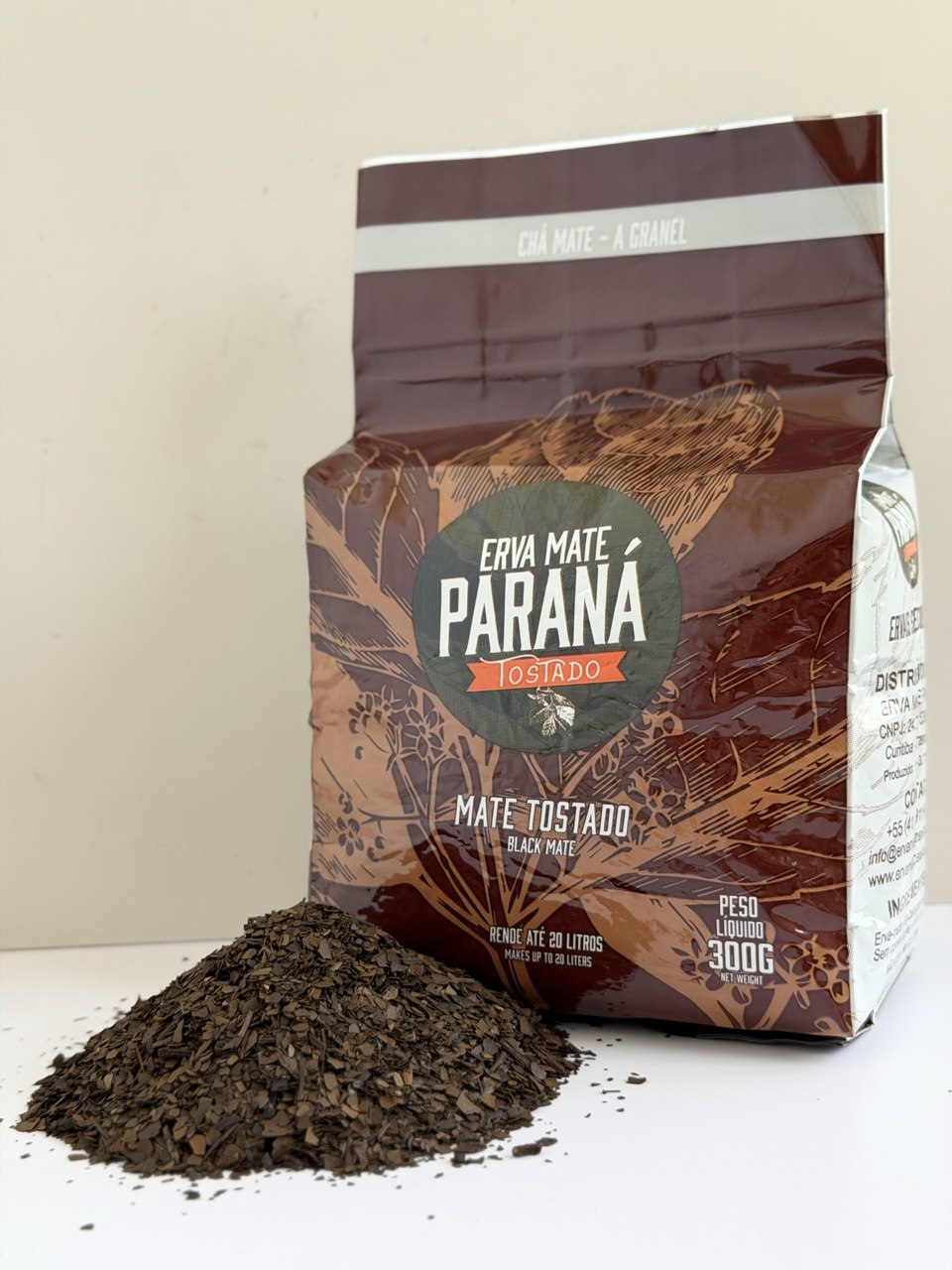
Roasted mate is made from the leaves and stems of the yerba mate plant (Ilex paraguariensis), the same plant used to produce traditional mate. The difference lies in the processing. After harvesting and drying, the leaves are carefully roasted, creating a deeper color and a richer, more complex flavor profile. This roasting process transforms the naturally herbaceous notes of mate into warm, toasted flavors reminiscent of coffee, cocoa, nuts, and caramel. One of the biggest reasons people are drawn to roasted mate is its smooth, approachable taste. Unlike traditional yerba mate, which can sometimes be bitter or grassy, roasted mate offers:
|
 |
Its comforting flavor makes it an excellent choice for those looking to reduce coffee consumption without sacrificing depth and warmth in their daily beverage.
Roasted mate naturally contains caffeine, along with other beneficial compounds such as theobromine and antioxidants. Many drinkers report experiencing a balanced sense of alertness and focus compared to the sharper energy spike often associated with coffee.
Potential benefits of roasted mate include:
- Sustained energy levels
- Enhanced concentration
- Reduced mental fatigue
- Antioxidant support
- A smoother caffeine experience
Because of its unique combination of natural stimulants, roasted mate can provide a gentle lift that supports productivity throughout the day.
In addition to loose-leaf roasted mate, consumers can find roasted mate in tea bags, instant blends, ready-to-drink beverages, and specialty coffee-style products. Tea bags, in particular, have helped introduce roasted mate to new audiences by offering a simple and familiar brewing method without the need for traditional mate equipment.
 |
 |
 |
These modern formats preserve the characteristic roasted notes of mate while providing greater convenience for busy lifestyles.
Simple brewing method
- Add 1–2 teaspoons of roasted mate to a cup or teapot
- Pour hot water over the leaves (around 90–95°C)
- Steep for 5–7 minutes
- Strain and enjoy
For a richer experience, roasted mate can also be prepared with milk or plant-based alternatives, creating a beverage similar to a latte.
Looking for a healthier coffee alternative that delivers smooth, sustained energy? Roasted yerba mate is becoming a favorite among tea lovers, wellness enthusiasts, and coffee drinkers seeking a balanced caffeine boost without the jitters. With its rich roasted flavor, natural caffeine content, and impressive antioxidant profile, roasted yerba mate offers a unique drinking experience that combines the best qualities of both coffee and tea.